

The Hidden HR Risks Behind Common Payroll Mistakes
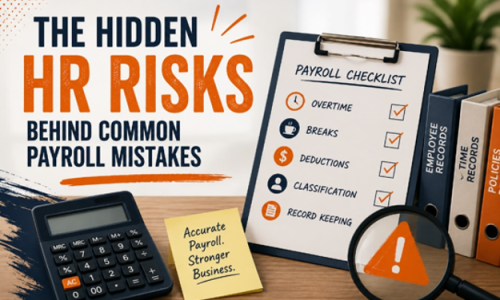
Most employers do not expect a simple payroll question to turn into a larger workplace issue. Sometimes it starts with something that seems minor – an employee noticing a difference on their paycheck, a question about overtime, or confusion about time records.
While many payroll concerns can be resolved quickly, problems often grow where there is a lack of communication, inconsistent processes, or missing documentation. Payroll accuracy is not just about making sure employees are paid correctly – it is also an important part of maintaining trust and avoiding unnecessary HR challenges.
Here are some of the common payroll mistakes that can create bigger problems for employers.
Mistake #1: Incorrect Overtime Calculations
Overtime mistakes are one of the most common payroll issues employers face. Under the Fair Labor Standards Act (FLSA), non-exempt employees must generally receive overtime pay at one and a half times their regular rate of pay for hours worked over 40 in a workweek.
Many overtime issues happen because employers are not aware of all the hours that count as “time worked.” For example, an employee may arrive early to prepare equipment, stay late to finish a project, or answer work-related messages outside of normal hours. If that time is worked, it generally must be included when calculating pay.
Another common mistake is paying overtime based on an employee’s hourly rate when additional compensation, such as commissions, may need to be included when determining the regular rate of pay.
If employees believe they were not paid correctly, they may file a wage complaint with the Department of Labor or pursue recovery of unpaid wages. Employers should have clear procedures for recording all time worked and addressing overtime questions before they become larger disputes.
Mistake #2: Timekeeping Errors and Missed Breaks
Timekeeping issues often seem small, but they can create major problems when payroll records do not match what actually happened. This includes employees forgetting to clock in, managers allowing employees to “fix” time later without proper documentation, employees working through unpaid meal periods, or timecards being changed without a clear reason.
For example, an employee claims that they regularly skipped their scheduled meal break because the workplace was busy. If payroll records show a full unpaid break was taken every day, but the employee states that they were working, the employer may have difficulty proving what actually occurred.
Accurate time records are important because employers are responsible for maintaining records of hours worked. Managers should be trained not to encourage off-the-clock work and should address timekeeping issues as soon as they notice them.
Mistake #3: Improper Payroll Deductions
Payroll deductions are another area where small mistakes can lead to employee complaints. Before deducting money from an employee’s paycheck, employers should confirm that the deduction is legally permitted and properly documented. A general acknowledgment signed at hiring is not always enough – withholding authorization forms should clearly identify the reason for the deduction and the specific amount being withheld.
For example, if an employee agrees to reimburse the company for damaged equipment, the employer should have documentation showing what was damaged, the cost being deducted, and the employee’s authorization for that specific deduction.
Clear documentation and communication help prevent situations where an employee believes money was improperly withheld from their paycheck.
Mistake #4: Employee Classification Mistakes
Classification mistakes can create some of the most expensive payroll problems for employers. One common example is treating someone as an independent contractor simply because they are temporary, paid by the project, or do not work full-time. However, classification is based on the actual working relationship – including factors such as control over the work, how the person is paid, and whether they operate independently.
Misclassifying an employee as a contractor can lead to issues involving payroll taxes, workers’ compensation, unemployment, and overtime requirements.
The same applies to exempt versus non-exempt employees. An employee may have a management title, but job titles alone do not determine whether overtime requirements apply. The employee’s actual duties and responsibilities must meet specific requirements.
Why Documentation Matters When Issues Arise
Payroll concerns are not always just payroll concerns. Sometimes they lead to broader employee complaints about fairness, policies, or how workplace issues are handled. When an employee raises a concern, employers should take the time to understand the issue, review the facts, and document the steps taken.
Documentation becomes especially important when dealing with unemployment claims. If an employment decision is later challenged, the Unemployment Agency will look at the information provided by both sides. This may include attendance records, disciplinary documentation, payroll records, policies, and communication history.
In many employer appeals, the employer has the burden of proving the facts supporting the decision. Without documentation, even a valid business decision can become difficult to defend.
How Employers Can Prevent Bigger Problems
The best way to handle payroll-related complaints is to prevent confusion before it starts. Clear policies, accurate time records, consistent procedures, and good communication all help create a smoother workplace.
Payroll mistakes happen, but how an employer responds can make a significant difference. Addressing concerns quickly and maintaining proper documentation helps protect both the business and its employees.
If you have questions about payroll practices, employee concerns, documentation, or HR compliance, UAP is here to help!