

Why Every Company Needs an AI Policy in Their Employee Handbook
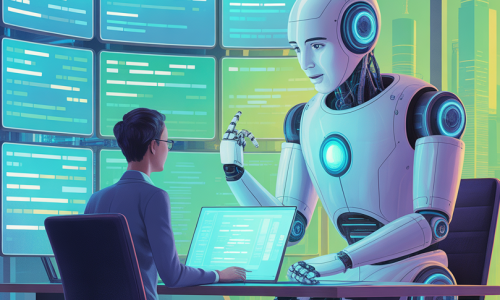
Artificial intelligence (AI) is no longer just a buzzword—it’s a workplace reality. From chatbots assisting with customer service to employees using generative AI tools to draft emails, analyze data, or brainstorm ideas, AI is reshaping how work gets done. While these tools offer speed and efficiency, they also raise important questions around ethics, data security, accuracy, and accountability. That’s why every organization, regardless of size or industry, should include a clear AI policy in their employee handbook.
Setting Clear Expectations
Without guidance, employees may use AI tools inconsistently or in ways that put the company at risk. An AI policy sets boundaries and provides direction. For example, it can clarify when AI use is encouraged, when human oversight is required, and what types of information must never be entered into AI systems (such as confidential client data). Clear expectations reduce misunderstandings and ensure employees use AI responsibly.
Protecting Data and Privacy
One of the biggest concerns with AI is data security. Employees might not realize that entering sensitive information into an external platform could expose proprietary or personal data. A well-crafted AI policy outlines rules on safeguarding confidential information and reinforces compliance with privacy laws and industry regulations.
Maintaining Accuracy and Accountability
AI tools can generate impressive results, but they are not infallible. They may produce biased, inaccurate, or incomplete content. A policy helps ensure that employees treat AI output as a starting point—not a final product—and that accountability for work remains with the employee, not the tool. This safeguards the quality of deliverables while maintaining professional standards.
Promoting Ethical Use
Beyond compliance and accuracy, companies also need to consider ethics. An AI policy can define acceptable use cases, prohibit discriminatory applications, and emphasize fairness, transparency, and inclusivity. This not only protects the organization legally but also strengthens its reputation as a responsible employer.
Staying Ahead of Change
AI technology is evolving quickly. By establishing a policy now, organizations demonstrate adaptability and forward thinking. An AI policy can be revisited and updated regularly, ensuring the company remains aligned with new tools, regulations, and best practices.
Conclusion
An AI policy is no longer optional—it’s an essential part of modern HR strategy. By adding it to your employee handbook, you protect your organization, empower your workforce, and position your company as a leader in responsible innovation. Ask UAP to write an AI policy for your handbook.